
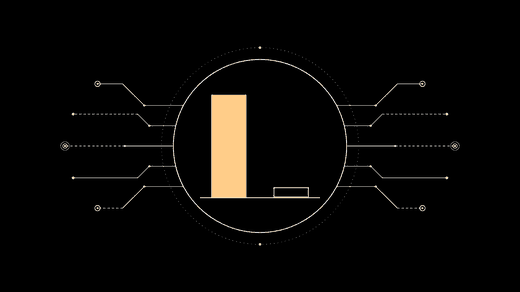
SEO aims to earn rankings, while AEO and GEO aim to get a brand named in AI answers. Add AI visibility work when your pages rank but your brand is missing from unbranded questions.
SEO, AEO and GEO sound like three different strategies. In practice, they share much of the same work. What changes is where your brand needs to appear and how you measure success.
Traditional SEO focuses on getting your pages found in search results. AEO and GEO extend that work to AI-generated answers, where buyers may see a recommendation without ever visiting your website.
That difference matters.
In September 2026, AI engines mentioned dofollow.com in 22.3% of answers across 50 tracked buyer questions. But on questions that didn't mention a brand, we appeared in just 2.2%.
The gap tells us something our Google rankings alone couldn't.
Key takeaways
- SEO is still the foundation. Google says optimizing for its AI features is still SEO. You don't need an entirely separate technical strategy.
- Rankings and AI mentions aren't interchangeable. A brand can perform well in one and poorly in the other.
- Unbranded questions reveal opportunities. They show whether AI engines recommend your company before buyers know its name.
AEO vs GEO vs SEO: what's the difference?
All three approaches aim to help people discover your business. The distinction is how that discovery happens.
SEO (search engine optimization) focuses on improving your website's visibility in traditional search results.
AEO (answer engine optimization) focuses on getting your information or brand included in direct answers.
GEO (generative engine optimization) focuses on visibility in answers created by generative AI tools such as ChatGPT and Perplexity.
| SEO | AEO | GEO | |
|---|---|---|---|
| Aim | Rank pages in search results | Get named or quoted in direct answers | Get named or cited in AI-written answers |
| Where it shows | Google and Bing results | AI Overviews, answer boxes, assistants | ChatGPT, Perplexity, AI Mode, AI Overviews |
| Typical work | Technical SEO, content, links | Clear answers on your pages | Your pages plus coverage on other sites |
| What you measure | Rankings, traffic | Answer appearances | Mentions, citations, share of voice |
The terminology isn't standardized. AEO and GEO overlap considerably, and many marketers use them interchangeably.
At dofollow.com, we generally use AEO to describe the broader work of improving visibility in AI answers. And despite the terminology, Google considers optimization for its generative AI features part of SEO.
Here, GEO means generative engine optimization, not geographic or local SEO.
What stays the same between SEO and AI search optimization
You don't need to abandon traditional SEO to compete in AI search.
Google says pages appearing in AI Overviews and AI Mode must meet the same fundamental Search requirements. They need to be indexed and eligible to appear with a snippet.
Google also says its AI features don't require special schema markup or an `llms.txt` file. The fundamentals still matter: useful content, accessible pages, relevant authority and a website search engines can understand.
That extends beyond Google.
SEO expert Lily Ray has noted that AI tools often rely on search indexes when answering commercial and research questions.
An August 2026 Rankability analysis found that 98.9% of pages ranking in the top three of traditional search results were cited somewhere across the AI platforms studied.
That analysis covered 31 topics and 11 platforms. It shows a relationship, not proof that ranking highly causes an AI citation. It's one reason our link-building work still prioritizes pages ranking between positions 4 and 15.
But strong rankings don't tell the whole story.
What changes when you optimize for AI answers
Your Google rankings don't always predict your AI visibility
We've seen this firsthand.
According to Ahrefs, dofollow.com didn't rank in the top 100 US results for several relevant agency searches in October 2026. Yet AI engines still mentioned us when answering some of those questions.
| Buyer topic | Our Google position, US (Ahrefs, Oct 20, 2026) | AI answers naming dofollow.com (Sep 21 to Oct 20, 2026) |
|---|---|---|
| SaaS link building agencies | Not in the top 100 for "saas link building agency" | 4 of 20 |
| Link building agencies for SaaS teams | Not in the top 100 for any "link building agency" search | 3 of 20 |
| AI visibility agencies | Not in the top 100 for any "ai visibility" or "aeo" search | 0 of 20 |
The same difference appears in our monthly tracking.
| Month (2026) | Google organic traffic, US (Ahrefs estimate) | AI answers naming us, all 50 questions | AI answers naming us, 23 unbranded questions |
|---|---|---|---|
| July | 2,423 | 14.2% | 1.1% |
| August | 1,877 | 20.4% | 1.1% |
| September | 1,993 | 22.3% | 2.2% |
From July to September, estimated Google traffic declined approximately 18%. Meanwhile, our share of AI answers increased.
That doesn't mean one caused the other. It means you can't use organic traffic as a substitute for measuring AI visibility.
The unbranded results also come from relatively small counts. In September, we appeared in eight of 368 answers to questions that didn't name a brand.
Each AI engine gives a different answer
Your brand might appear frequently in ChatGPT and barely register in Perplexity. Here's what our September tracking showed across the same 50 buyer questions.
| Engine, September 2026 (200 answers each) | Answers naming dofollow.com | Answers naming the most-named competitor |
|---|---|---|
| ChatGPT | 31.5% | 24.0% |
| Google AI Mode | 28.0% | 20.5% |
| Google AI Overviews | 22.0% | 18.5% |
| Perplexity | 7.5% | 20.5% |
We led on the reported competitor set on three engines, but Perplexity told a different story. Its most-mentioned competitor appeared about 2.7 times as often as dofollow.com. That's why we recommend tracking engines separately rather than relying on one overall visibility score.
SEO strategist Kevin Indig has compared AI answer tracking to polling. A single result is less useful than repeated observations across a consistent set of questions.
Being read, cited and named are different outcomes
An AI engine can retrieve your page without citing it. It can also cite your website without recommending your brand.
Our September data illustrates the difference.
| Engine, September 2026 | Pulled up a dofollow.com page | Cited a dofollow.com page | Named dofollow.com |
|---|---|---|---|
| All four engines (800 answers) | 30.0% | 24.5% | 22.3% |
| ChatGPT | 32.5% | 26.0% | 31.5% |
| Google AI Mode | 30.5% | 30.5% | 28.0% |
| Google AI Overviews | 25.0% | 23.0% | 22.0% |
| Perplexity | 32.0% | 18.5% | 7.5% |
Perplexity retrieved a dofollow.com page in 32% of answers but named our brand in only 7.5%. If we measured citations alone, we'd miss how often buyers actually saw our name.
The pages behind an answer are often someone else's
Your website isn't the only source influencing AI answers.
Across 18 client projects, third-party websites accounted for 54.6% of citations to each project's 25 most-cited pages. Those sources can include industry publications, comparison articles, guides and review platforms.
If AI engines repeatedly cite an article that mentions your competitors but not your company, improving your own website may not close that gap.
Our guide to getting your brand mentioned in ChatGPT explains how to identify those opportunities.
When should a B2B company invest in AEO or GEO?
Start by understanding where your website and brand already stand.
| What you find | What to do first |
|---|---|
| Key commercial pages aren't indexed or don't rank | Fix SEO first. We hold AI placement work while pages have indexing or technical problems. |
| Pages rank, but AI answers skip your brand | Add authority to those pages and make them easier to quote. |
| You're named on some engines but not others | Compare the pages each engine cites for the same question. |
| You're named on branded questions but not unbranded ones | Work to get onto the third-party pages cited for unbranded questions. |
| You're already named consistently | Keep the cited pages current and keep measuring. |
You don't need to choose between SEO and AI visibility. You need to identify which problem is limiting your visibility and invest accordingly.
“If your commercial pages aren't ranking yet, that's probably where I'd start. AI visibility becomes a priority when buyers are asking ChatGPT about your category and your competitors are showing up instead of you.”
Eric Carrell, CEO and co-founder, dofollow.com
Our AI visibility service helps identify those gaps and prioritize the work.
How we decide what to work on first
Step 1. We split branded and unbranded questions
Questions that include your company name are useful, but they don't show whether buyers discover you independently. We track those separately from questions that mention no brand. In our September data, dofollow.com appeared in 22.3% of all answers but only 2.2% of unbranded answers.
Step 2. We check who gets named instead
We look at the brands appearing in answers where yours is missing. On our 23 unbranded questions in September, one competitor appeared in 17.4% to 30.4% of answers, depending on the engine. dofollow.com appeared in just 1.1% to 3.3%. That gives us a clearer picture of who buyers are encountering instead.
Step 3. We check the causes in a fixed order
We work through a consistent set of checks:
- Already mentioned: Maintain the sources supporting your visibility.
- Content retrieved, brand not mentioned: Make the page's answer and brand connection clearer.
- Page ranks but isn't selected: Investigate relevance, authority and competing sources.
- Page missing or inaccessible: Address technical problems or content gaps first.
- Brand absent across the category: Strengthen consistent category positioning and relevant third-party mentions.
We also check whether AI engines primarily cite brand-owned or independent pages for each question. That distinction helps determine whether the next opportunity is on your website or someone else's. We avoid self-promotional "best of" lists that rank our own company first. And we don't treat one favorable answer as proof of improvement. We look for changes that hold across approximately eight weekly tracking runs.
How to measure SEO and AI visibility together
Put traditional search performance and AI visibility in the same report, but measure them separately.
For SEO, track rankings and organic traffic.
For AI visibility, track how often your brand is named, how often your pages are cited and your share of voice against competitors.
Use a consistent set of buyer questions and report branded and unbranded performance separately. Google Search Console provides search performance data, including traffic associated with Google's AI features. Confirm the available reporting breakdown before treating AI Overviews and AI Mode as separately measurable.
For ChatGPT, Perplexity and other engines, use consistent question-level tracking.
The goal isn't to produce one impressive number. It's to understand whether buyers are finding your company, where competitors have an advantage and what deserves attention next.
Frequently asked questions
Will AEO replace SEO?
Unlikely. Google treats its AI features as part of Search, and many AI tools use search indexes to find information. AEO adds another set of outcomes to measure. It doesn't eliminate the need for strong SEO.
Are AEO and GEO the same thing?
They're closely related. AEO generally emphasizes visibility in direct answers, while GEO focuses on generative AI responses. In practice, the work overlaps substantially.
Can you rank on Google but not appear in AI answers?
Yes. Strong rankings don't guarantee an AI mention. The reverse can also happen. We didn't rank in the top 100 US results for "saas link building agency," but AI engines named us in four of 20 answers to a related question.
Does link building help with AI search visibility?
It can help indirectly. Relevant backlinks can strengthen pages competing in traditional search, and AI engines may retrieve those pages. But a backlink doesn't guarantee an AI citation or brand recommendation.
How do you know whether your company needs AEO?
Start with the unbranded questions your buyers ask. If AI engines consistently recommend competitors while overlooking your company, investigate which sources influence those answers. That will help you decide whether to improve your content, strengthen authority or pursue relevant third-party mentions.
Sources
- Optimizing for generative AI search is "still SEO"; Search doesn't use llms.txt; no special schema needed. Google Search Central, "Google's Guide to Optimizing for Generative AI Features on Google Search", developers.google.com/search/docs/fundamentals/ai-optimization-guide (Updated Jul 10, 2026)
- No additional requirements for AI Overviews or AI Mode; page must be indexed and snippet-eligible. Google Search Central, "AI Features and Your Website", developers.google.com/search/docs/appearance/ai-features (Updated Dec 10, 2025)
- Generative AI performance report rolled out to all sites; uses Web search type data. Google Search Console Help, support.google.com/webmasters/answer/16984139 (Rollout note dated Aug 31, 2026)
- ChatGPT, Perplexity and Gemini retrieve from search indexes for most commercial and research queries. Lily Ray, "Your GEO Strategy Might Be Destroying Your SEO", lilyraynyc.substack.com/p/your-geo-strategy-might-be-destroying (Mar 18, 2026)
- AI cited 98.9% of pages ranking 1 to 3 in traditional search; 31 topics, 11 platforms, observational; "traditional" is cross-engine, not Google only. Rankability, "35 AI SEO Statistics for 2026", rankability.com/blog/ai-search-statistics (Sep 23, 2026 (August 2026 snapshot))
- "Prompt tracking should be closer to polling and focus groups than SEO rank tracking". Kevin Indig, "AI Halftime Report: H1 2026", growth-memo.com/p/ai-halftime-report-h1-2026 (Jul 27, 2026)
- AI search measurement is closer to brand measurement than classic SEO (Siege Media's summary of Critchlow's argument; no transcript). Siege Media, "What Your CMO Needs to Know About AI Search w/ Tom Critchlow" (Ross Hudgens hosts), siegemedia.com/conversation/what-your-cmo-needs-to-know-about-ai-search-w-tom-critchlow (Jun 15, 2026)
- Answers naming dofollow.com by month, engine, branded and unbranded; pages pulled up and cited. Peec AI, dofollow.com project, 50 questions, 4 engines (Jul 1 to Sep 30, 2026; pulled Oct 21, 2026)
- Answers naming dofollow.com per question. Peec AI, dofollow.com project, 20 answers per question (Sep 21 to Oct 20, 2026)
- 54.6% of citations to third-party pages (competitor domains corrected in Peec, re-pulled Oct 29). Peec AI, 18 client projects, 25 most-cited pages each (Sep 1 to Oct 13, 2026)
- Google positions and estimated organic traffic for dofollow.com (traffic re-pulled Oct 29, 2026). Ahrefs Site Explorer, US (Oct 20, 2026)
- Order of checks, eight-weekly-run rule, no self-ranking lists, link building starts with pages ranking 4 to 15. dofollow.com written method (Current)
Method note: of our 50 questions, 23 include "dofollow," 4 name a competitor and 23 name no brand. "Unbranded" means the last group. Each question ran about once a week on each engine, so September had 800 answers. The current question set started on June 19, 2026, so trends start in July. Our tool didn't match one tracked competitor's short name in September, so that brand is missing from the competitor figures.